ISRAEL · PALESTINE · POLITICS · HUMANITARIAN CRISIS
Israel’s Next Election and Palestinian Rights: Political Change, Humanitarian Concerns, and the Questions That Remain (October 22, 2026)
Article Updated: October 24, 2026
As Israel prepares to vote on October 27, the campaign is unfolding alongside continuing humanitarian needs in Gaza, rising concerns about settler violence and displacement in the West Bank, and a deeper question: how much could a change in government alter the daily realities and political rights of Palestinians?
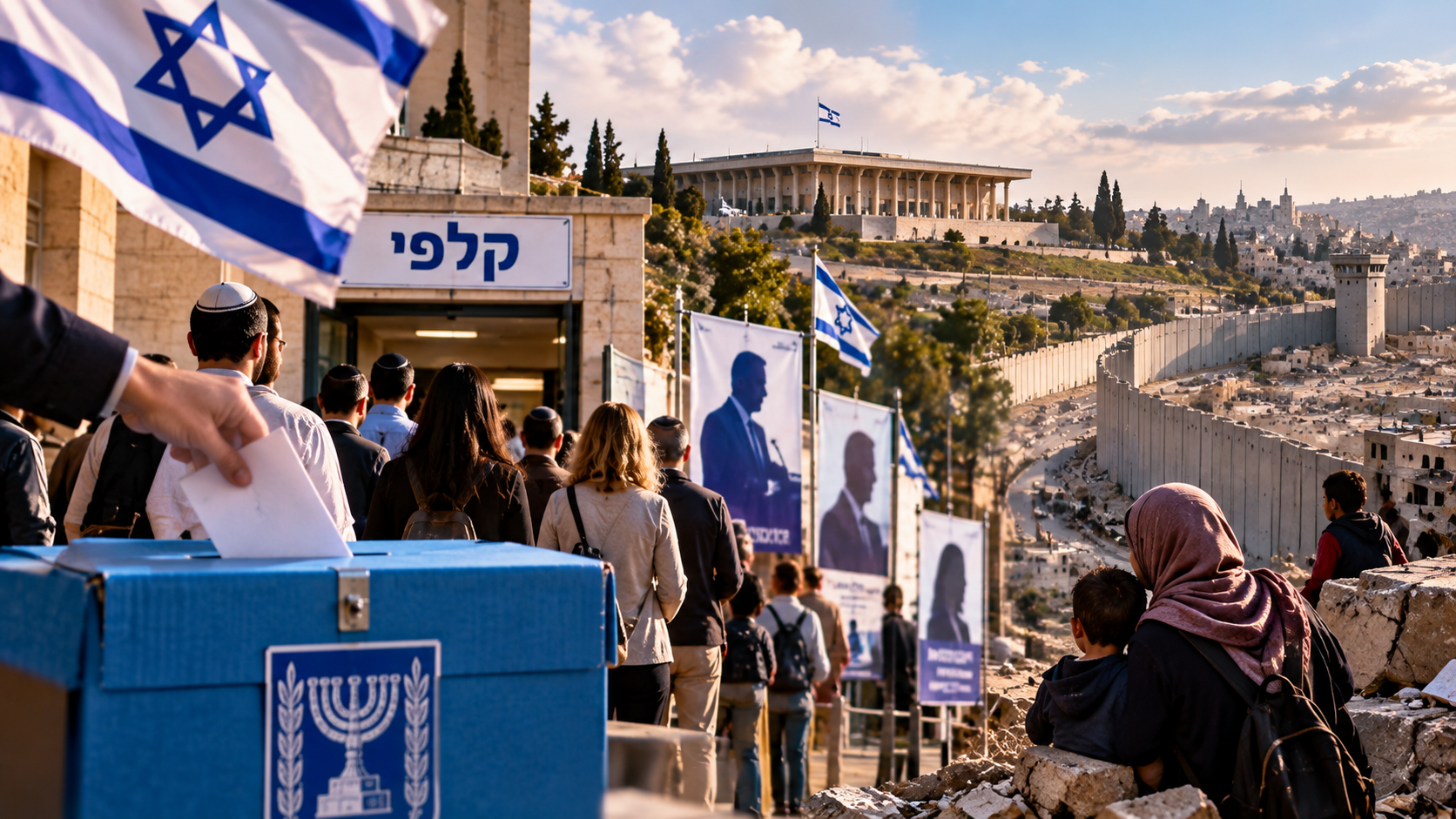
Israel’s parliamentary election is scheduled for Tuesday, October 27, 2026. Voters will choose a new 120-member Knesset, after which parties must negotiate to form a governing coalition. The election follows the shock of the Hamas-led attacks of October 7, 2023, the subsequent war, and years of intense debate over security, accountability, settlements, judicial power and the future of Palestinians living under Israeli control. The result will determine the next government, but it will not by itself settle the conflict or establish a Palestinian state. Read Reuters’ election guide Check the Israel Democracy Institute’s election timeline
The Palestinian-rights question also extends beyond what Israeli voters choose. Palestinians in Gaza and most Palestinians in the occupied West Bank, including East Jerusalem residents who do not hold Israeli citizenship, cannot vote in Israel’s national election, even though Israeli government decisions significantly affect their movement, security, access to services and political future. Palestinian citizens of Israel are eligible to vote in Israeli elections; the distinction matters because not all Palestinians share the same citizenship or legal status. Read Amnesty International’s pre-election statement
This article examines what a political change might mean, what the candidates’ documented positions suggest, and which outcomes will depend on coalition agreements, security decisions, access for humanitarian aid, legal obligations and international pressure. Forecasts are treated as uncertain, while institutional findings and humanitarian statistics are attributed to their original sources.
Key takeaways
- Israel’s election is scheduled for October 27, 2026; as of October 24, no result or governing coalition has been established.
- Reuters’ October 22 analysis says a government change could alter coalition dynamics and some settlement decisions, but does not point to an assured major shift in Israel’s approach to Palestinians.
- The UN’s October 15 humanitarian report describes continuing civilian casualties, displacement, shelter shortages and constraints on health, food and water services in Gaza, as well as settler attacks and displacement in the West Bank.
- The Israeli election does not give most Palestinians living in the occupied Palestinian territory a vote in choosing the Israeli government whose policies affect them.
- International court actions and legal findings remain important to accountability but should not be confused with criminal convictions of individuals or the outcome of an election.
- Meaningful change would need to be assessed through actual policy, access, protection and implementation—not campaign language alone.
1. Why this election matters
Israel’s proportional parliamentary system makes coalition-building central to governing. The 120 seats in the Knesset mean a government ordinarily needs the support of at least 61 members to command a majority. A party can win the largest share of votes without being able to govern alone, and smaller parties can gain leverage when larger blocs are closely matched. The European Parliamentary Research Service described the 2026 contest as fragmented, with neither major bloc assured of a majority. This is a structural observation, not a prediction of the final seat count. Read the European Parliamentary Research Service briefing
That matters for Palestinian policy because the prime minister’s room for manoeuvre depends not only on personal preference but on the coalition partners needed to pass a budget, survive confidence votes and agree on security policy. A government reliant on parties that demand annexation or expanded settlements may face different constraints from a coalition whose partners oppose unauthorised outposts or seek more diplomatic flexibility. Even then, a coalition agreement is not the same as implementation: ministries, the military, courts, public servants, budget decisions and international relationships all shape what happens next.
For Israeli voters, the ballot also encompasses domestic issues such as trust in leadership after October 7, military-service exemptions, the economy, judicial power and the direction of Israel’s security doctrine. Palestinian rights are connected to those debates, but they are not the only reasons voters may support or reject a party. Avoiding a single-issue explanation is important when interpreting a multi-party election.

2. What political change could—and could not—mean
A change of government can alter senior appointments, the priorities of ministries, coalition commitments, settlement authorisations and the tone of diplomacy. It may also affect how Israeli officials respond to international criticism and whether a future administration invests political capital in humanitarian arrangements or negotiations. These are plausible mechanisms of change; their direction and scale depend on the policies a coalition actually adopts.
But the election alone does not stop military operations, reopen a border crossing, rebuild destroyed homes, remove movement restrictions or resolve the status of the occupied Palestinian territory. Those outcomes depend on operational orders, agreements, implementation, security conditions, funding and the decisions of multiple actors. Palestinians will experience the government through these concrete effects more than through speeches on election night.
A practical test for political promises
For any stated change, ask four questions: What exact policy will change? Who has legal authority to implement it? What timeline and resources are attached? What public evidence would show that the change reached civilians?
Reuters’ October 22 analysis notes that a defeat for Prime Minister Benjamin Netanyahu could lead to a different governing alliance and changes in settlement policy, while the broad security framework could remain similar. The distinction is crucial: a new coalition might change some decisions without reversing the underlying disputes over Palestinian statehood, territorial control or Gaza’s post-war governance. Read Reuters’ analysis of a possible Netanyahu election loss
3. Netanyahu, Eisenkot and the policy gap
Reuters identifies former military chief Gadi Eisenkot as a central opposition figure challenging Netanyahu’s coalition. The two men differ on aspects of West Bank settlement policy and on the kind of coalition they might lead. Reuters reports that Netanyahu’s governments oversaw rapid settlement expansion, including unauthorised outposts, while Eisenkot has said he opposes unauthorised outposts, settler violence and construction in the E1 area. Reuters also reports that Eisenkot supports settlements that comply with Israeli law. That is a description of their domestic-policy positions; compliance with Israeli domestic law is not the same question as legality under international law.
On the broader question of Palestinian statehood and security control, the same Reuters analysis says both Netanyahu and Eisenkot oppose an independent Palestinian state and insist Israel retain security control over the territory between the Jordan River and the Mediterranean Sea. Both also demand Hamas disarm before Israeli forces withdraw from Gaza and say fighting could resume if necessary. These positions indicate that replacing the prime minister would not automatically create agreement on sovereignty, security arrangements or Gaza’s future administration. Read the candidate-policy comparison from Reuters
Coalition partners could be decisive. Reuters notes that Netanyahu depends on far-right partners Bezalel Smotrich and Itamar Ben-Gvir, who advocate annexation, while an Eisenkot-led coalition could involve centrist and centre-left parties. The European Parliamentary Research Service also highlights the limited willingness among mainstream Jewish opposition parties to form a coalition with parties primarily representing Palestinian citizens of Israel. These are coalition constraints, not proof that a particular arrangement is impossible; negotiations after an election can change the options.
For Palestinian rights, the relevant questions are therefore more detailed than “who wins?” Would a coalition halt or authorise settlement activity? What rules would govern protection from settler violence? Would movement and access restrictions change? How would humanitarian access, civilian protection and Gaza governance be handled? Would any government support a credible political process toward Palestinian self-determination? Campaign statements should be compared with written agreements, enacted measures and results.
4. Gaza: the humanitarian test beyond campaign rhetoric
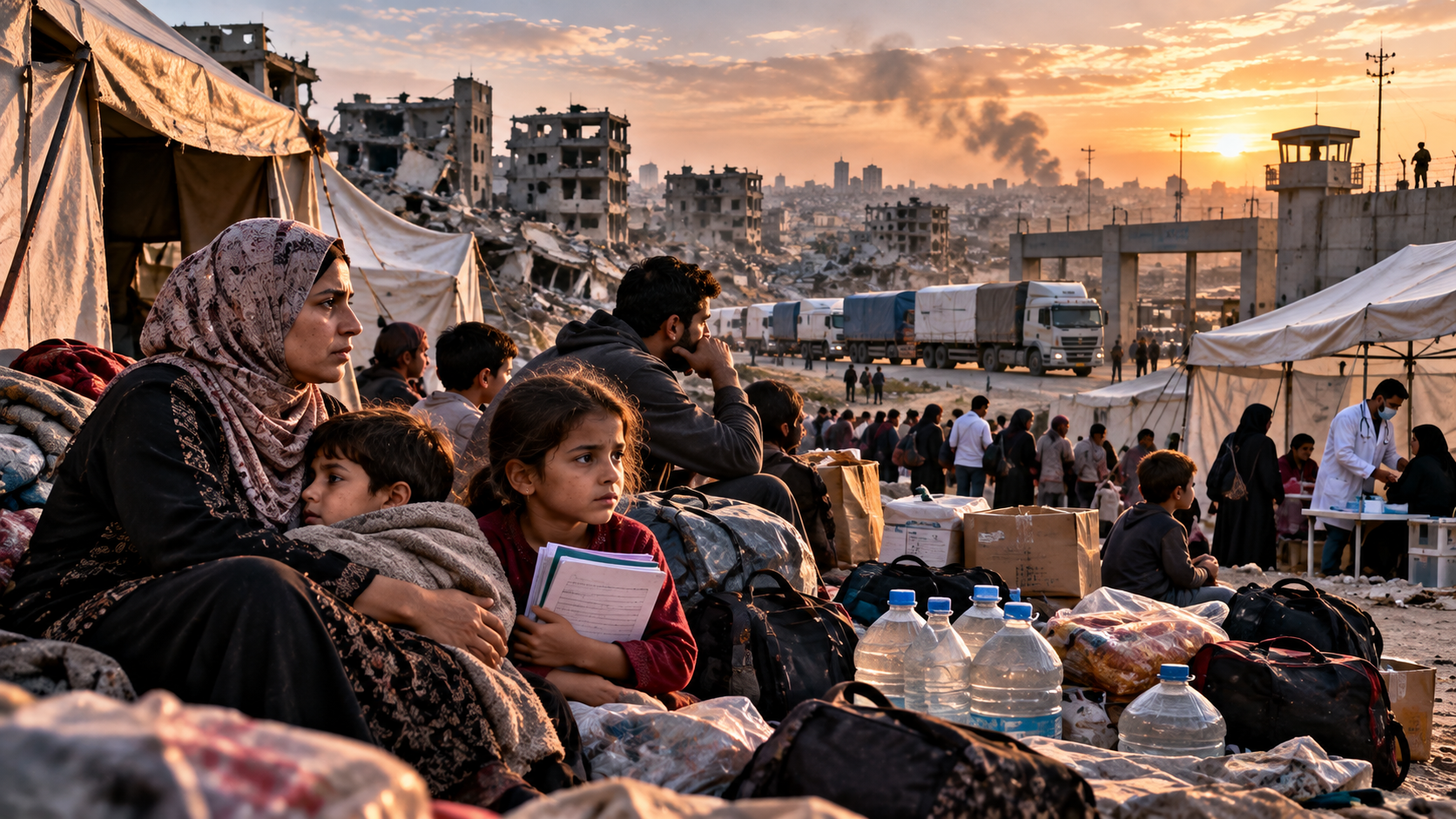
The humanitarian situation in Gaza provides a direct test of whether political and diplomatic choices translate into changes for civilians. The UN Office for the Coordination of Humanitarian Affairs (OCHA), in a report published October 19 covering mainly September 29 to October 12, said airstrikes, shelling and gunfire continued to cause reported civilian casualties. It also described damaged infrastructure, widespread displacement, limited shelter materials, shortages affecting health and water services, and operational barriers slowing the movement of humanitarian cargo. These are the UN’s reported findings for the stated period, not a forecast about conditions after election day. Read OCHA’s October 15 humanitarian situation report
| Indicator in OCHA’s report | Reported figure | Why it matters |
|---|---|---|
| Displaced people at medium-to-high flood risk | About 950,000, including more than 400,000 at high risk | Damaged or makeshift shelters can become more dangerous as the rainy season approaches. |
| Families requiring winter shelter assistance | 294,250 families; available supplies could partially assist about 52,000 (18%) | Shelter materials and access to safe relocation locations remain insufficient. |
| Food assistance dependence | OCHA said 90% of the population relied on humanitarian food assistance | Aid delivery and purchasing power remain central to food access. |
| Households reporting severe food insecurity in recent monitoring | 44% went to bed hungry at least once; 45% had completely run out of food at least once in the prior 30 days | The figures refer to the cited WFP monitoring sample and period; they are not a daily count of every household. |
The report says humanitarian cargo was still affected by inspection, scanning, handling capacity and coordination requirements. Between September 29 and October 12, 937 trucks carrying humanitarian supplies were manifested and 807 were offloaded across five corridors, according to the Logistics Cluster figures cited by OCHA. Those figures describe a logistics pipeline, not the full level of need. The distinction matters because deliveries reaching a crossing, being offloaded, entering Gaza and arriving at families’ locations are separate stages.
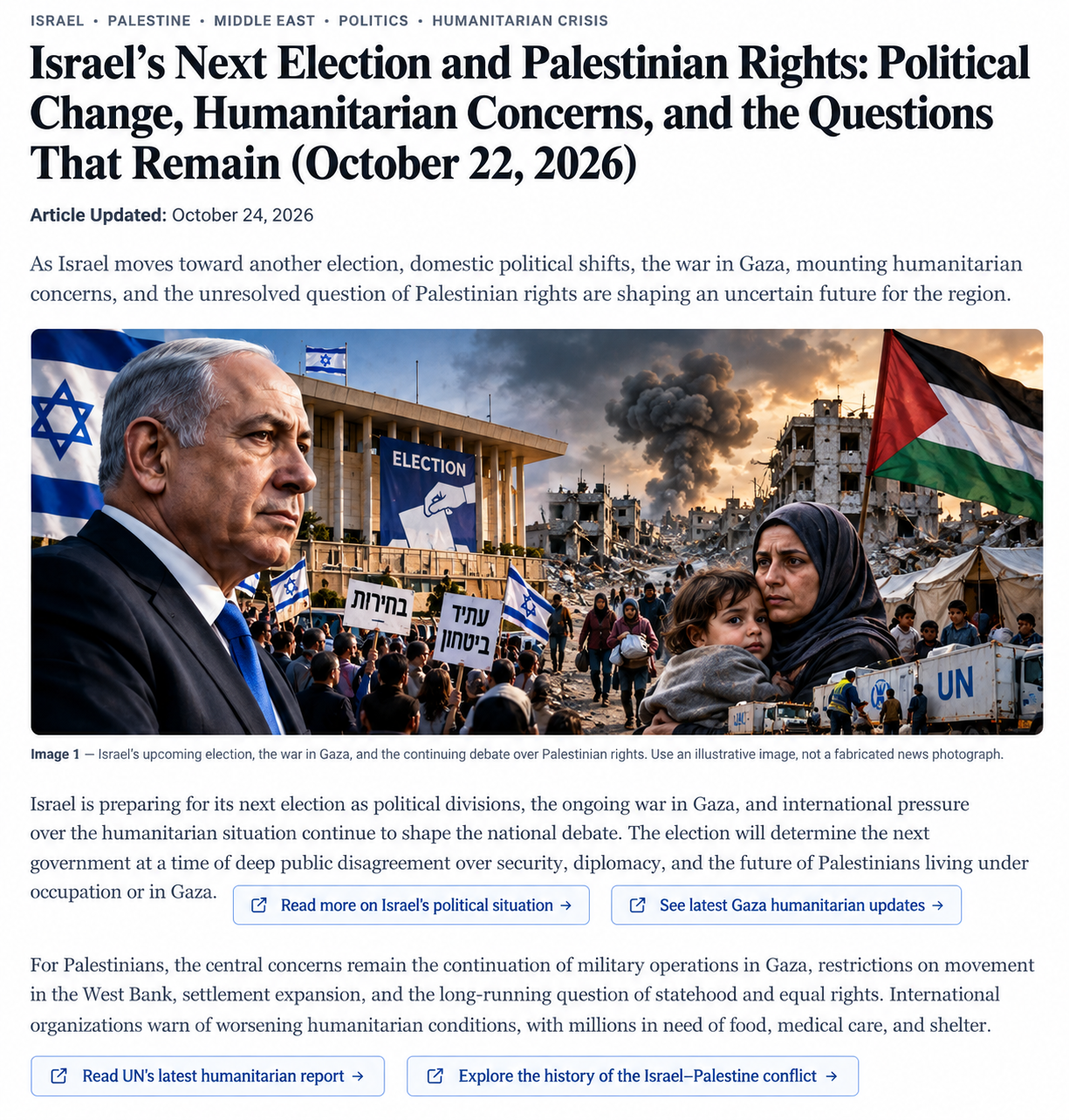
Health and water systems are also linked to policy decisions. OCHA reported that shortages of fuel, engine oil, generator parts and essential medicines threatened continuity of care, while drinking-water production in the week of October 6–12 was 34% below mid-September levels. Hundreds of thousands of children remained without access to structured learning, according to the same report. Rebuilding these systems requires materials, financing, safe access and time; even an immediate change in political rhetoric would not produce quick recovery unless it changes the conditions under which repair work can happen.
Israeli officials and supporters of the government frame security as a prerequisite for lasting arrangements, including preventing Hamas from reconstituting its military capacity. Palestinians and humanitarian organisations stress civilian protection, predictable aid access, freedom of movement and the conditions required for families to return to stable lives. These claims and concerns should be assessed through documented policy, access records, civilian outcomes and applicable law—not assumed to have been resolved by a ceasefire declaration or a change in cabinet.
5. The West Bank: settlements, violence and movement
The West Bank, including East Jerusalem, raises a related but distinct set of questions. OCHA reported that five Palestinians were killed and 246 injured by Israeli forces or settlers during the two weeks covered by its October 15 update. It recorded 244 settler-attack incidents across 113 communities during that period, resulting in casualties or property damage, and said more than 2,060 such attacks had been documented across roughly 300 communities since the beginning of 2026. These are OCHA’s documented figures for its reporting categories and timeframe. Review OCHA’s West Bank figures and methodology
OCHA also said demolitions displaced 96 Palestinians over the two-week reporting period, including 69 people in one East Jerusalem building demolition—the largest single demolition incident in East Jerusalem in its records since tracking began in 2009. Restrictions on access to land, roads and essential services can compound displacement by making it harder for communities to farm, reach schools or clinics, protect property and maintain livelihoods.
Election policy could affect planning approvals, enforcement against unauthorised outposts under Israeli law, protection from violence, and access arrangements. But the terms used in domestic Israeli debate and international-law assessments are not interchangeable. The ICJ’s 2024 advisory opinion addressed settlements, annexation, self-determination and the legality of Israel’s continued presence in the occupied Palestinian territory under international law. That opinion forms part of the legal context; it is not the same thing as a criminal conviction of an individual.
For communities living with repeated attacks, demolitions or road restrictions, the practical measure of change would be whether incidents decline, perpetrators are investigated, residents can reach land and essential services, and displaced families can return or obtain meaningful remedies. Announcements matter, but local implementation and transparent monitoring determine whether protections exist outside a press conference.
6. International law, courts and accountability
The international legal framework does not disappear during an election campaign. On July 19, 2024, the International Court of Justice issued an advisory opinion concluding that Israel’s continued presence in the Occupied Palestinian Territory is unlawful and that Israel is under an obligation to bring that presence to an end as rapidly as possible. The Court also addressed settlement activity, the Palestinian people’s right to self-determination and obligations for other states. An advisory opinion is not a criminal verdict against an individual, and separate opinions by some judges disagreed with aspects of the Court’s reasoning; it remains a central pronouncement of the ICJ on the legal questions it considered. Read the ICJ’s official summary of its 2024 advisory opinion
The International Criminal Court is a separate institution. In November 2024, its Pre-Trial Chamber issued arrest warrants for Benjamin Netanyahu and Yoav Gallant in the Situation in the State of Palestine after rejecting Israeli jurisdictional challenges. Warrants reflect the Court’s assessment at that stage that there were reasonable grounds to believe alleged crimes had been committed; they are not convictions and do not determine the outcome of an election. The underlying allegations and legal proceedings must be described in their proper procedural context. Read the ICC’s official announcement on the warrants
Amnesty International’s October 23 statement argued that the election should not divert attention from abuses and rights concerns affecting Palestinians. That statement represents an advocacy organisation’s assessment and policy recommendations. It can be considered alongside UN humanitarian reporting and the decisions of international courts, while retaining the distinction between an NGO’s allegations, an international court’s legal findings, and a final criminal judgment following trial. Read Amnesty International’s election statement
For any incoming government, accountability would involve more than how it describes the law. It would include whether alleged violations are investigated, whether court processes are respected, whether humanitarian duties are met, and whether policies comply with relevant legal obligations. Equally, legal responsibility is not a substitute for political arrangements capable of protecting civilians and creating a feasible path toward rights and self-determination.
7. Who gets a vote—and who lives with the outcome?
The asymmetry in political participation is central to this story. Israeli citizens, including Palestinian citizens of Israel, can vote in the Knesset election if eligible. Most Palestinians living in Gaza and the occupied West Bank are not Israeli citizens and do not vote in Israel’s national election, although decisions made by Israel can affect their movement, security, territory and daily life. Amnesty International highlighted this democratic divide in its October 23 statement. The point is not that one election can be treated as a referendum by everyone affected, but that a governing choice made by one electorate can have substantial consequences for people outside that electorate.
Palestinian political participation also faces its own unresolved obstacles. A planned Palestinian legislative election for November 28, 2026, was reported as set to be delayed, possibly until September 2027, after Palestinian Authority Vice President Hussein al-Sheikh said the anticipated political, security and economic conditions had not materialised. The report cited a letter to France seen by Reuters. This postponement has a different process and cause from Israel’s election, but it highlights that Israelis and Palestinians are not entering the same electoral moment. Read the report on the planned Palestinian election delay
For Palestinians, the ability to influence decisions through elected institutions, safe civic activity, legal remedies and accountable leadership remains an important part of political rights. Those aims do not erase Israel’s security concerns or the rights of Israeli civilians; they are questions of how security, civilian protection, self-determination and representation can be addressed within a durable political framework.
8. What to watch after election day
When results are announced, the immediate headlines will focus on seat counts and coalition arithmetic. For an evidence-based assessment of consequences for Palestinian rights, several later signals will be more informative:
- The coalition agreement: Does it set commitments on settlements, annexation, Gaza governance, security control or future negotiations? Which ministries go to parties with different stated goals?
- First administrative decisions: Are there concrete changes to settlement authorisations, enforcement against outposts, movement restrictions, humanitarian coordination or access to essential services?
- Humanitarian indicators: Do aid shipments reach civilians predictably? Are fuel, medical supplies, shelter materials and water-system repairs more available? Do civilian casualties and displacement change?
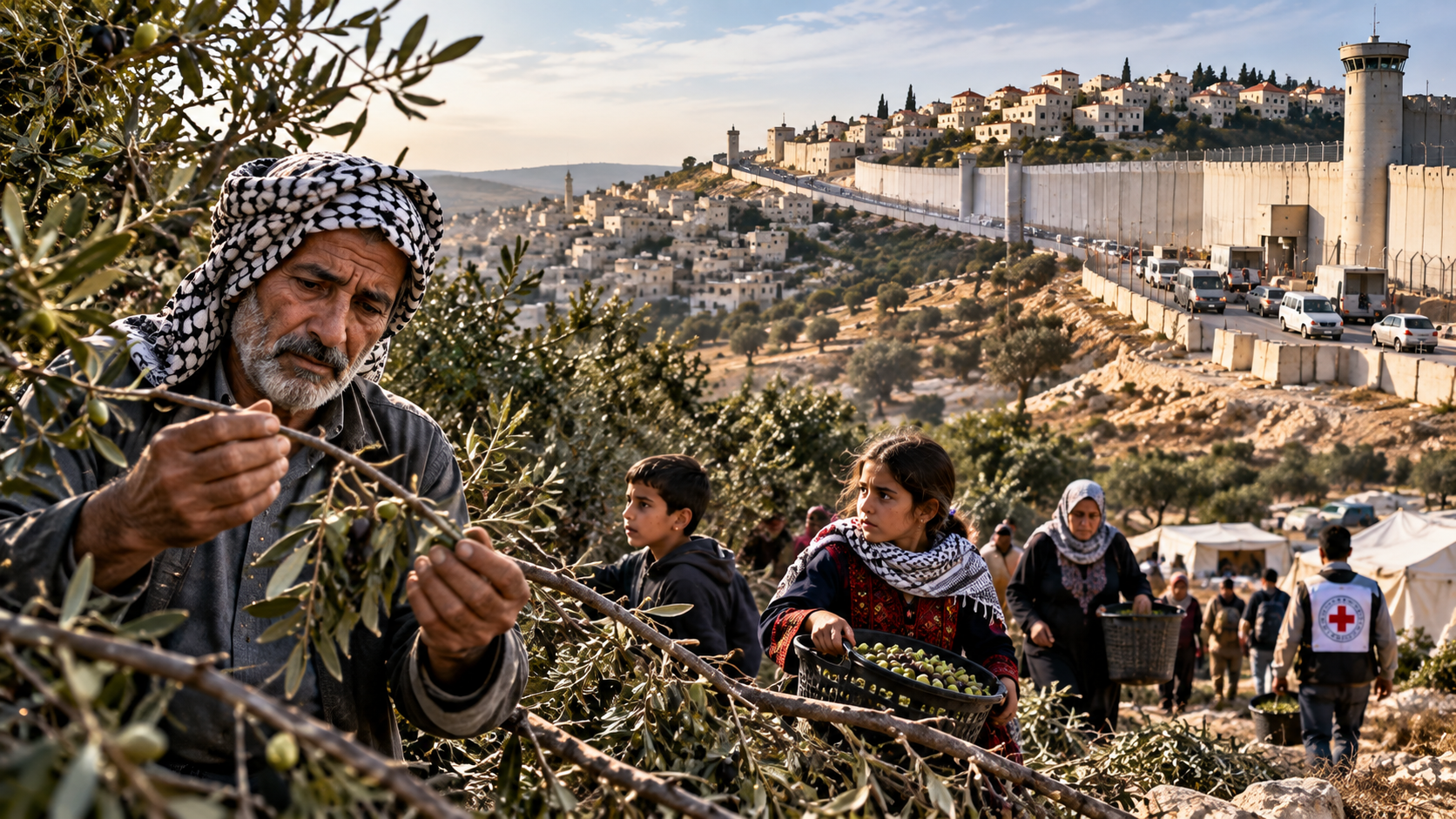
- West Bank protection: Are reported settler attacks investigated? Can farmers reach land during the olive harvest? Are demolitions or displacement affecting additional communities?
- International legal compliance: How does the government respond to court decisions, investigative processes and duties under international humanitarian and human-rights law?
- Political representation: Are there credible steps addressing Palestinian participation, local rights, governance and a path toward self-determination, or do policy documents leave those questions unresolved?
These indicators do not assume that one electoral outcome will produce a specific result. They make promises testable and allow readers to separate a change in personnel from a change in policy. The strongest evidence of progress or deterioration will come from documented decisions and outcomes rather than the rhetoric of any one campaign.
For an official timeline of Israel’s election and procedural milestones, the Central Elections Committee publishes the election timetable, while the Israel Democracy Institute provides explanatory material on the political system and party lists. Open Israel’s Central Elections Committee timetable Explore the Israel Democracy Institute election guide

Conclusion: the ballot is a turning point, not a settlement
Israel’s October 27 election could change governing alliances and some policy decisions that affect Palestinians. Reuters’ analysis suggests, however, that several key positions—including opposition to an independent Palestinian state among the two principal figures it compared and demands concerning Hamas’s disarmament—may limit the scale of any immediate shift. The composition of the coalition, the policy it adopts and its decisions after taking office will matter at least as much as the election-night result.
Meanwhile, OCHA’s October reporting describes a humanitarian emergency in Gaza and continuing violence, displacement and access problems in the West Bank. These realities will not disappear when ballots are counted. Progress would need to be visible in civilian safety, aid access, shelter and medical recovery, protection from violence, legal accountability and political rights. The central question after this election is therefore not simply whether the government changes, but whether the decisions that follow materially change the conditions under which Palestinians and Israelis live.
Frequently asked questions
When is Israel’s next election?
Israel’s election for the 26th Knesset is scheduled for Tuesday, October 27, 2026. As of October 24, voting has not taken place nationally and no result or new coalition should be treated as confirmed.
Could a Netanyahu election loss change policy toward Palestinians?
It could change coalition partners and some decisions, particularly around West Bank settlement policy. Reuters reported on October 22, 2026, that a government change would not necessarily produce a major shift in the wider approach to Palestinians, since key security and statehood positions may remain similar. The coalition agreement and subsequent actions will be essential to assess.
What is the humanitarian situation in Gaza as of the latest UN report?
OCHA’s report published October 19 described continued reported civilian casualties, extensive displacement, severe shelter gaps and shortages affecting health, food and water services. The report’s main reporting period covered September 29 to October 12, 2026; the numbers should not be treated as a live count for every day after that period.
Can Palestinians vote in Israel’s national election?
Palestinian citizens of Israel can vote if eligible. Most Palestinians in Gaza and the occupied West Bank are not Israeli citizens and cannot vote in Israel’s national election, even though Israeli government policy has significant effects on their lives.
What did the International Court of Justice say in 2024?
In an advisory opinion issued July 19, 2024, the ICJ concluded that Israel’s continued presence in the Occupied Palestinian Territory is unlawful and said it must be brought to an end as rapidly as possible. It was an advisory opinion on international-law questions, not a criminal conviction of a person.
Did the ICC convict Netanyahu or Gallant?
No. The ICC issued arrest warrants on November 21, 2024, in the Situation in the State of Palestine. Warrants are procedural judicial decisions and are not convictions. Any claim about individual criminal responsibility must distinguish allegations, warrants, trials and final judgments.
Was a Palestinian legislative election also scheduled for 2026?
A legislative election was planned for November 28, 2026, but an October 9 report citing Reuters said it was set to be delayed, potentially until September 2027, because the expected political, security and economic conditions had not materialised.

Sources and references
This independent analysis draws on current reporting, an EU parliamentary research briefing, official Israeli election information, UN humanitarian updates, and primary international-court materials. Advocacy positions are labelled as such. All links below lead to the cited material rather than a general publisher homepage.
- Reuters — “How would a Netanyahu election loss change Israel’s policies toward the Palestinians?” October 22, 2026.
Read Reuters’ analysis of policy continuity and change - Reuters via Investing.com — “Israeli elections: how they work and who is in the race,” October 19, 2026.
Read the election explainer - European Parliamentary Research Service — “2026 Israeli legislative election,” October 15, 2026.
Read the EPRS election briefing - Israel Democracy Institute — “Elections 2026: timeline and election guide.”
View the election timeline and guide - UN OCHA — “Humanitarian Situation Report | 15 October 2026,” published October 19, 2026.
Read the full UN humanitarian report - Amnesty International — “Israel/OPT: Elections must not deflect attention from Israel’s international crimes,” October 23, 2026.
Read Amnesty’s position and recommendations - International Court of Justice — “Summary of the Advisory Opinion of 19 July 2024.”
Read the ICJ legal summary - International Criminal Court — “Situation in the State of Palestine: ICC Pre-Trial Chamber I rejects the State of Israel’s challenges and issues warrants of arrest for Benjamin Netanyahu and Yoav Gallant,” November 21, 2024.
Read the ICC press release - The Times of Israel, citing Reuters — “Palestinians set to delay November’s legislative elections, citing worsening conditions,” October 9, 2026.
Read the report on the Palestinian election delay - Israel Central Elections Committee — “Committee Activity Timeline — 26th Knesset election.”
View the official election timetable
More evidence-based explainers
Continue exploring carefully sourced explainers and current-affairs analysis, with primary sources linked near the claims they support.
Editorial note: This article is an independent pre-election analysis, not a prediction of the election result, legal advice, or an endorsement of a political party. Humanitarian figures refer to the reporting period specified by OCHA. The article was updated October 24, 2026, and should be checked against newer official updates before republication.