PUBLIC POLICY · HOUSEHOLD ECONOMICS · AFFORDABILITY
Beyond Election Speeches: How Healthcare Costs, Housing Prices, and Inflation Are Shaping America’s Future (October 20, 2026)
Article Updated: October 24, 2026
For millions of households, the economic debate is not abstract. It is a monthly calculation: the insurance premium, the rent or mortgage, groceries, fuel, utilities, and what remains after the bills are paid.
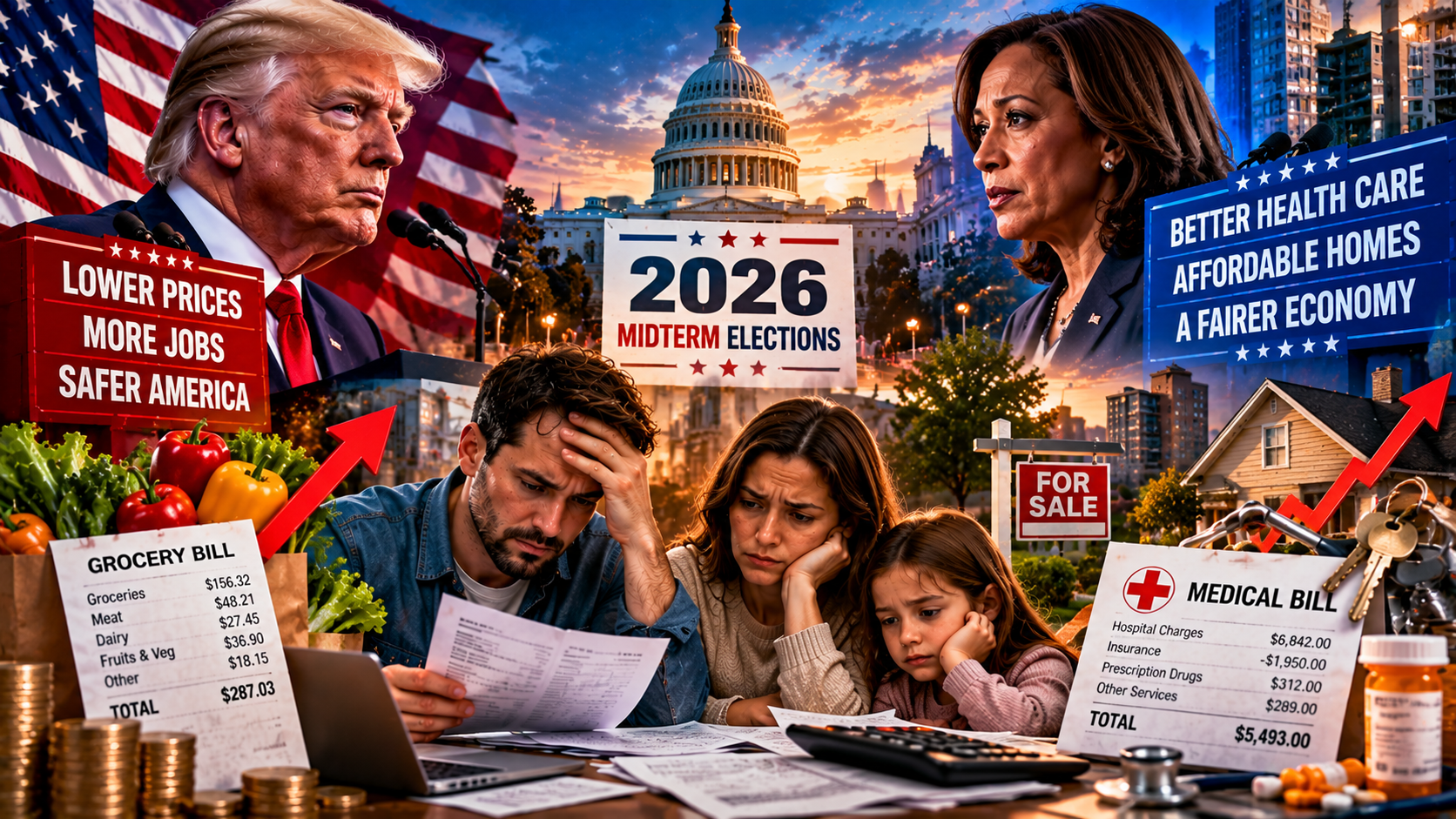
America’s affordability debate is often framed as a contest between campaign promises: lower taxes, cheaper housing, reduced medical bills, better wages, or stronger public benefits. But household finances do not respond to slogans alone. They respond to the interaction of prices, pay, interest rates, insurance design, public policy, local housing supply, and the financial risks each family can absorb.
The pressure is politically significant as the country approaches the November 2026 midterm elections. In an AP-NORC poll conducted October 8–12, 85% of voters said the economy was one of the most important issues when considering their vote, while 84% said the same about the cost of living and 69% said health care was a top issue. The figures measure the priorities of surveyed voters at that moment; they are not a forecast of election results. Read the AP-NORC poll and methodology ↗ Read Reuters’ analysis of midterm issues ↗
Three pressures illustrate why the debate reaches beyond election speeches. Health coverage can become more expensive even when a family does not use more medical care. Housing can remain out of reach even when home prices stop rising quickly, because mortgage rates and income determine affordability too. Inflation can slow while the price level remains high. Understanding those mechanisms is essential for evaluating policy promises realistically.
Key takeaways
- September 2026 consumer inflation was 3.7% over the year; the CPI rose 0.6% in the month, and gasoline prices jumped 9.1% in September.
- KFF’s August analysis found that insurers proposed a median 15% increase in ACA Marketplace premiums for 2027. Final rates and each enrollee’s subsidy-adjusted bill can differ substantially.
- A 2026 KFF employer-benefits survey reported an average worker contribution of $7,471 a year toward family health insurance premiums, roughly 9% more than in 2025.
- ATTOM reported that homeownership costs in 98% of analyzed U.S. counties were less affordable than historical norms in the third quarter of 2026.
- Housing and medical bills interact with wages, debt, savings and public programmes; a tax cut or targeted subsidy can help some households without solving every affordability problem.
- Readers should separate proposed policies from enacted laws, announced programmes from delivered payments, and national averages from local household experience.
1. Inflation: why “slower price growth” does not always feel cheaper
The U.S. Bureau of Labor Statistics reported that the Consumer Price Index for All Urban Consumers rose 0.6% on a seasonally adjusted basis in September 2026 after a 0.4% rise in August. The index was 3.7% higher than a year earlier. Gasoline increased 9.1% in September, accounting for more than half of the monthly increase in the all-items index, while the energy index rose 5.2%. Shelter costs rose 0.4% during the month. {ext(“bls_cpi”, “Read the September 2026 CPI release”)}

These figures describe a broad basket, not every family’s bill. A commuter may feel a gasoline spike immediately; a renter before lease renewal may experience housing costs differently from someone moving to a new apartment. Inflation is a rate of change, not the total price level. When inflation slows, prices usually rise more slowly rather than returning to their earlier levels.
For a household, purchasing power is what matters: take-home income compared with expenses that cannot easily be avoided. If wages rise modestly while health premiums, rent, fuel and utilities rise faster, a family can feel worse off even when average wages increase nationally. Energy costs may also pass through to trucking, farming, delivery and manufacturing, though the timing and size of those effects vary by business and market.
2. Healthcare: rising premiums, deductibles and the cost of care
Healthcare costs arrive in layers: monthly premiums, deductibles, copayments or coinsurance, and bills for services outside a plan’s network or coverage. A lower premium can mean greater expenses when care is needed; a more comprehensive plan can cost more upfront but protect against some larger bills.
For people buying coverage through the Affordable Care Act (ACA) Marketplace, KFF’s updated analysis, published August 3, 2026, found insurers proposed a median premium increase of 15% for 2027 across 276 insurers with public filings nationwide. Insurers cited rising healthcare-service costs, general inflation, labor shortages, and Marketplace-specific factors including the expiration of enhanced premium tax credits at the end of 2025. These are proposed gross rates—not a prediction that every enrollee’s final out-of-pocket premium will rise exactly 15%. {ext(“kff_market”, “Read KFF’s 2027 Marketplace premium analysis”)}

An AP report on KFF’s 2026 employer-benefits survey said workers contributed an average $7,471 a year toward family premiums—about 9% more than the year before—while total family premiums, including the employer share, reached $28,303 on average. These are averages, not amounts every employee pays. {ext(“ap_employer_health”, “Read AP’s report on employer health premiums”)}
The 2026 Milliman Medical Index estimated $37,824 in annual healthcare costs for a family of four with typical employer-sponsored coverage. That is a combined cost estimate, not the family’s direct out-of-pocket bill. Keeping this distinction clear matters when comparing claims about what workers or taxpayers actually pay. {ext(“milliman”, “Read the 2026 Milliman Medical Index”)}
Why medical costs are hard to control
Prices are shaped by hospital and physician charges, prescription drugs, new treatments, staffing, service use, insurer-provider negotiations and administrative complexity. A subsidy can reduce what an eligible family pays each month without lowering the underlying price of care. Conversely, a plan that lowers premiums by narrowing benefits may expose patients to higher costs when they need treatment. The trade-offs depend on plan design and the household’s health needs.

When comparing plans, consider the annual premium plus expected out-of-pocket costs, check doctors and prescriptions, and verify eligibility for subsidies. Do not assume a proposed rate increase equals the final change in every enrollee’s bill; state approval and financial assistance matter.
3. Housing: prices, borrowing costs and the barriers to ownership
For renters, housing pressure includes rent, deposits, utilities and lease renewals. For buyers, the calculation also includes mortgage interest, property taxes, insurance, maintenance and closing costs. A house can become cheaper by one measure yet remain out of reach if mortgage rates are high or incomes have not kept up.
ATTOM’s third-quarter 2026 U.S. Home Affordability Report found homes were less affordable than historical norms in 98% of counties with sufficient data; typical costs for median-priced homes exceeded historical norms in 570 of 583 counties analysed. The national median sale price was 2% lower than a year earlier and 1% lower than the second quarter. That illustrates why a modest price decline does not automatically make ownership affordable. {ext(“attom”, “Read ATTOM’s Q3 2026 affordability report”)}
Mortgage rates translate prices into monthly payments
Mortgage interest changes the monthly cost of the same loan amount. Buyers may respond to higher rates by looking at less expensive homes, delaying a purchase, saving a larger down payment or extending their search. Actual offers depend on credit, loan type, down payment, fees, points, lender and market conditions. Freddie Mac’s weekly mortgage-rate survey is a national benchmark, not a personalised quote; buyers should compare multiple lenders and total closing costs. {ext(“freddie”, “Check Freddie Mac’s mortgage-rate survey”)}
Housing scarcity is also a supply problem
High-demand areas need more than mortgage relief: zoning, permits, construction costs, land, infrastructure and financing all affect how quickly supply can respond. Buyer assistance can help eligible families meet upfront costs, but where supply is constrained, some aid may be absorbed into higher prices. Expanding housing choices, supporting responsible construction and improving rental stability address different parts of the problem.
Ownership also carries costs beyond the sale price. The Federal Reserve’s 2026 household well-being report described housing as the largest expense for most families and noted that insurance costs led some homeowners to go without coverage or buy less than they wanted. A policy that helps eligible homeowners with financing may still leave renters, uninsured owners or households in high-cost regions with little direct relief. {ext(“fed_housing”, “Read the Federal Reserve’s housing report”)}
4. How the pressures compound in one household budget
Healthcare, housing and inflation compete for the same dollars. If take-home pay rises modestly while rent renews at a higher level, health premiums increase and fuel becomes more expensive, the family has less left for savings, repairs, education or debt repayment. Households with cash savings can bridge a gap temporarily; those living paycheck to paycheck may use expensive credit, delay care or fall behind on bills.

The Urban Institute’s American Affordability Tracker estimates that 49% of people in American families lack the resources to cover the true cost of living securely in their communities. Its cross-year comparison says average earnings grew about 43% since 2017, while home sale prices rose 81%, rents 54% and the lowest-cost Silver ACA Marketplace plan rose 77%. These categories and methods differ, so the figures are broad trend comparisons rather than the budget of a single family. They still help explain why housing and health coverage may outpace earnings for many households. {ext(“urban”, “Explore the Urban Institute affordability tracker”)}

One policy can help one family more than another. A tax deduction depends on eligibility and tax liability; a health subsidy helps households that qualify and enrol in an eligible plan; lower mortgage insurance may help certain owners but not renters. Evaluate who benefits, when help arrives, how it is funded and whether costs shift to another group.
5. What policy can—and cannot—do
Government affects affordability through taxes, subsidies, public programmes, regulation, competition policy, infrastructure and housing rules. But a policy does not always lower the underlying price: it may reduce the bill for a qualifying household, change the way a service is delivered or encourage supply to grow.
| Policy lever | Potential benefit | Limits and trade-offs |
|---|---|---|
| Health premium tax credits | Reduce premiums for eligible Marketplace enrollees. | Do not automatically reduce provider prices; eligibility matters. |
| Drug and hospital price measures | May reduce costs for selected medicines or services. | Effects vary by service, insurer and implementation. |
| Housing supply and permitting reform | Can enable more homes in places with demand. | Construction takes time and depends on land, labour, infrastructure and finance. |
| Buyer assistance | Helps eligible households meet upfront purchase costs. | May not fix monthly payments or limited supply. |
| Tax reductions or direct payments | Can increase disposable income for qualifying households. | Value varies by eligibility; funding and long-term effects matter. |
| Inflation and monetary policy | Influences demand, borrowing costs and expectations. | Does not target all prices equally; higher rates can make mortgages costlier. |
Policy can have delays or unintended effects. Complex applications can prevent eligible households from receiving assistance; a spending cut may lower federal outlays while moving costs to states, employers, patients or families. The right test is measurable impact: did total household cost fall, did the intended group benefit, did access or supply improve, and what did it cost?
6. How to evaluate affordability promises beyond election speeches
Before accepting any promise about cheaper healthcare, homes or everyday goods, ask five questions:
- What exact cost changes? Is the proposal lowering a price, providing a subsidy, reducing taxes, changing insurance coverage or shifting a bill to another payer?
- Who qualifies? Check income limits, location, age, work status, health-plan type, property ownership and other eligibility rules.
- When does it take effect? A campaign promise, proposed rule, signed executive order, enacted law, appropriated budget and fully implemented programme are different stages.
- How is it funded? Consider whether the measure relies on government spending, tax revenue, borrowing, insurer changes, local budgets or private investment.
- What is the likely net effect? Include premiums, deductibles, interest, fees, taxes and possible changes to benefits—not just the advertised benefit.
For health coverage, compare annual premiums plus expected out-of-pocket costs. For a home, include mortgage interest, taxes, insurance, maintenance and commuting. For inflation, check the official index and understand whether it measures monthly or annual changes. For every promise, prefer the original government document or independent analysis over a campaign graphic.
Families can also take practical steps that do not depend on election outcomes: request health-plan and mortgage comparisons, review eligibility for benefits, check medical bills for errors, compare insurance renewal quotes and avoid relying on hypothetical rebates before they are approved. These measures cannot solve systemic affordability problems, but they can help households make better decisions within the choices available.

7. What the affordability debate means for America’s future
When households devote more income to essentials, they may have less for education, retirement, childcare, home repairs and emergencies. Young adults may delay buying a home; families may remain in jobs mainly for health benefits; older homeowners may struggle with insurance and upkeep even after paying off their mortgage.
No single national policy will make every expense affordable for every family. Better outcomes may require a combination of more housing where demand is high, usable health coverage, attention to the cost and quality of medical services, stable economic policy and targeted aid that reaches people with genuine need. Each option has costs and trade-offs that should be discussed openly.
The strongest public test is not who promises the largest reduction but what has actually become cheaper, for whom, by how much, and at what cost to the wider system. That is a more durable measure of policy success than an election slogan.
Frequently asked questions
Why does inflation feel high if the rate is lower than in previous years?
Inflation is the rate of change in prices, not the total price level. When inflation slows, prices usually rise more slowly rather than returning to their previous levels. Households may therefore continue to pay much more than they did several years ago, even if the latest annual rate is lower than an earlier peak.
How much are ACA Marketplace premiums expected to rise in 2027?
KFF’s August 2026 analysis found insurers proposed a median increase of 15% for 2027. This is the proposed gross premium change across the insurers studied, not the exact change every enrollee will pay. Final state-approved rates, income-based premium tax credits and the plan selected all affect an individual’s bill.
Why can home prices fall without making housing affordable?
Affordability depends on more than the home’s sticker price. Mortgage rates, household income, down payments, property taxes, homeowners’ insurance and maintenance all influence total cost. A small fall in sale prices can be outweighed by high financing costs or other expenses.
Does a health-insurance premium equal the total healthcare cost?
No. Premiums are the regular payments to maintain coverage. Deductibles, copayments, coinsurance and uncovered or out-of-network services can add substantial expenses. Employer contributions also make up part of the total premium for workers with employer-sponsored plans.

Can government policy reduce living costs immediately?
Some targeted benefits can change a qualifying household’s budget relatively quickly once funded and implemented. Structural changes—such as increasing housing supply or changing how healthcare is priced—often take longer. A policy’s effect depends on eligibility, execution, market conditions and whether costs are reduced or shifted to another payer.
Sources and references
This article is an independent multi-source analysis. Statistics are tied to their reporting periods; proposed insurance rates are distinguished from final out-of-pocket premiums; and housing affordability measures are not presented as identical to house-price inflation.
- AP-NORC — “Ahead of the midterms, most voters cite the economy and cost of living as top issues and favor political change,” October 15, 2026.
Read poll findings and survey details ↗ - Reuters — “Three issues defining the 2026 US midterm elections,” October 20, 2026.
Read Reuters’ election context ↗ - U.S. Bureau of Labor Statistics — September 2026 Consumer Price Index, October 14, 2026.
Read the official CPI release ↗ - KFF — “How Much and Why ACA Marketplace Premiums Are Going Up in 2027,” August 3, 2026.
Read KFF’s premium analysis ↗ - Associated Press — reporting on KFF’s 2026 employer health-benefits survey, October 2026.
Read AP’s employer-premium report ↗ - Milliman — 2026 Milliman Medical Index.
Read the healthcare cost index ↗ - ATTOM — Q3 2026 U.S. Home Affordability Report, October 22, 2026.
Read the housing-affordability report ↗ - Freddie Mac — Primary Mortgage Market Survey.
Check the weekly mortgage-rate data ↗ - Urban Institute — American Affordability Tracker.
Explore the affordability data ↗ - Federal Reserve — Report on the Economic Well-Being of U.S. Households in 2025: Housing, May 2026.
Read the Federal Reserve report ↗ - Internal Revenue Service — Working Families Tax Cuts: Individuals and Workers.
Read the IRS policy summary ↗ - Reuters — Housing-cost executive order, October 22, 2026.
Read Reuters’ housing policy report ↗
Look beyond the promise—measure the outcome
A credible affordability plan should explain what becomes cheaper, who benefits, when the change reaches households, and what trade-offs are involved.
Editorial note: This article is general economic and public-policy analysis, not financial, legal or health-insurance advice. Economic measures cover different periods and populations; proposed policies and rates may change. Verify the linked primary sources before republication.