U.S. POLITICS · IMMIGRATION · FAMILIES AND HUMAN RIGHTS
Immigration and Humanity Before America’s Midterm Elections: Families, Borders, and the Price of Political Decisions (October 20, 2026)
Article Updated: October 24, 2026
As Americans prepare to vote on November 3, immigration is no longer only a debate about border control. It is also a test of how the country balances enforcement, family unity, legal process, community safety, economic reliance and the dignity of people whose futures are decided by policy.
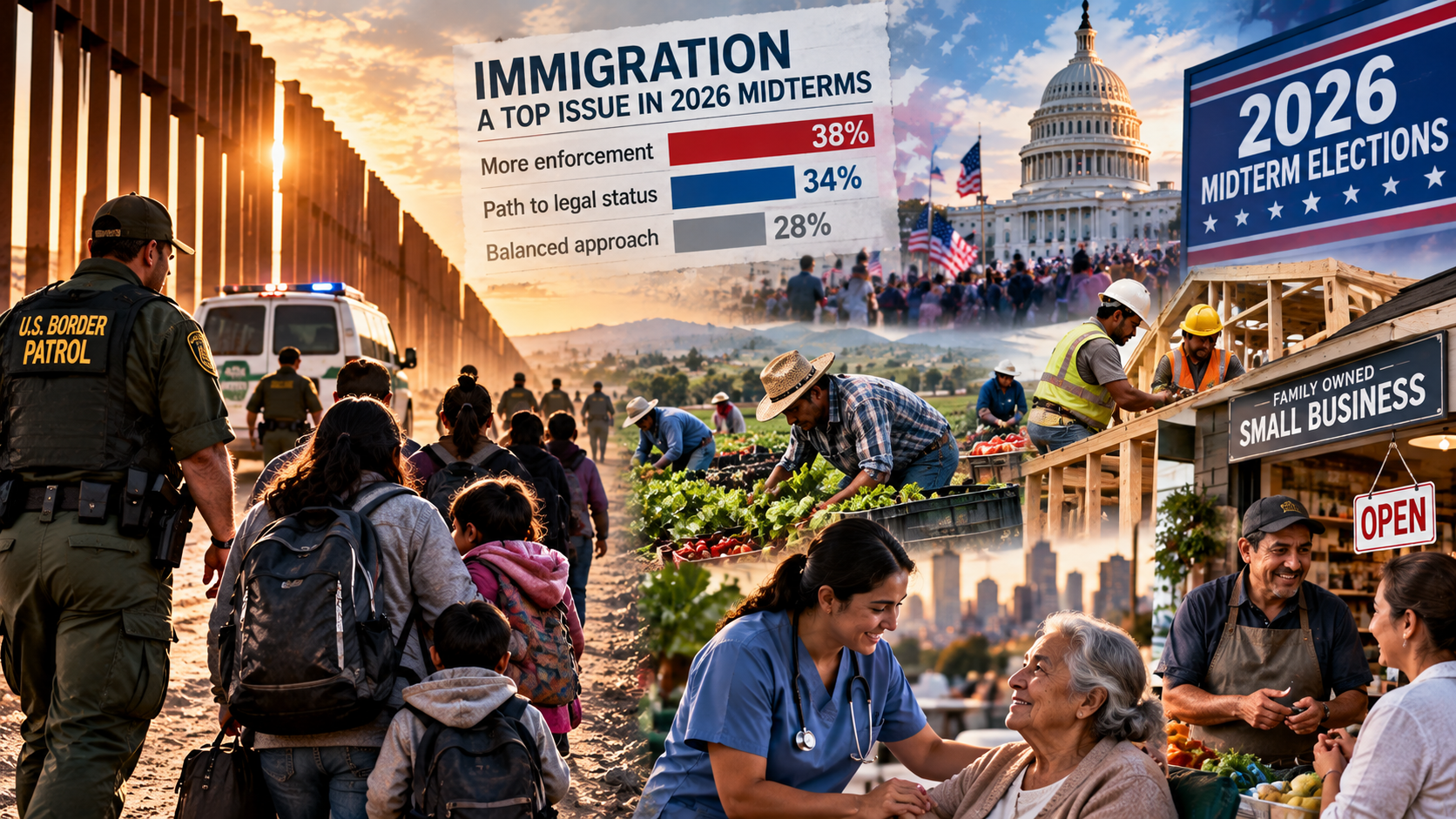
Immigration has become one of the defining disputes of the 2026 midterm campaign. In its October 20 analysis of the November 3 elections, Reuters described immigration as a highly divisive issue alongside affordability and President Donald Trump’s standing. The report noted that border apprehensions had fallen sharply under the administration, while enforcement disputes, fatal encounters involving federal agents and disagreements over funding continued to fuel political conflict. That combination makes it difficult to reduce the issue to a single campaign slogan. Read Reuters’ October 20 midterm analysis ↗ Check official federal election information ↗
For one voter, immigration policy may mean stronger control at the border and confidence that laws are enforced. For another, it may mean fear that a parent will be detained, a child will attend court without a lawyer, or a neighbour who works on a farm or in a hospital will disappear from daily life. Those experiences are not interchangeable, and responsible coverage should not pretend they are. They are part of the same policy system, with consequences that must be examined separately and honestly.
The central question is not whether a country can enforce immigration law. It can and does. The harder questions are how enforcement is carried out, what process people receive, how children are protected, whether rules are applied consistently, and how public officials weigh security objectives against family and community costs.
Key takeaways
- November 3, 2026, is the date of the U.S. midterm elections. Immigration remains highly salient, but economic concerns rank even higher in national voter polling.
- Pew Research Center found that 59% of registered voters said immigration was very important to their midterm vote; the figure was 72% among supporters of Republican candidates and 53% among supporters of Democratic candidates.
- An AP-KFF poll found rural voters divided about the effects of the administration’s enforcement policies: roughly one-third viewed the impact positively, one-third negatively, and about three in ten said there was no effect.
- The Migration Policy Institute describes a less visible pattern of family separation linked to detention and deportation inside the country. It stresses that the total number is unknown; cited estimates of children with a detained parent should not be mislabelled as a confirmed count of separations.
- The Supreme Court has agreed to hear a challenge to the administration’s broad mandatory-detention policy. As of October 24, argument was scheduled for December 9, 2026; the Court had not decided the merits.
- A durable policy debate must distinguish border management, asylum processing, removal proceedings, work-authorisation rules, child welfare and lawful immigration. Treating them as one problem obscures both the evidence and possible remedies.
1. Immigration enters the midterms with both political force and practical consequences
Midterm elections determine who controls Congress and therefore who leads committees, shapes appropriations, schedules hearings and negotiates legislation. Congressional control can affect immigration-agency funding, detention oversight, asylum procedures, legal-services programmes and cooperation between federal and local authorities.

The debate is complicated by the difference between border activity and enforcement inside the United States. Reuters reported on October 20 that border apprehensions had fallen sharply under the administration, while disputes over enforcement methods, fatal encounters involving federal agents and agency funding kept immigration politically contentious. Lower border encounters do not answer separate questions about interior arrests, detention conditions, asylum processing or family separation. {ext(“reuters_midterms”, “Read Reuters’ October 20 midterm analysis”)} {ext(“cbp_data”, “Review CBP’s official encounter dashboard”)}
2. What voters say—and why the numbers do not tell one simple story
A Pew Research Center survey of registered voters, fielded September 28–October 4 and published October 8, found 59% said immigration was very important to their midterm vote. That included 72% of supporters of Republican candidates and 53% of supporters of Democratic candidates. In the same survey, 84% named the economy and 68% healthcare as very important issues. Immigration matters, but it competes with wider pocketbook concerns. {ext(“pew_poll”, “Read Pew’s survey and methodology”)}
An AP-KFF survey of 2,241 rural registered voters, fielded August 12–24, found about one-third thought the administration’s immigration enforcement had helped their community, one-third thought it had harmed the community, and roughly three in ten saw no effect. Around three-quarters wanted midterm candidates to discuss immigration. The full rural-voter sample had a margin of sampling error of plus or minus three percentage points. {ext(“ap_kff_rural”, “Read the AP-KFF rural-voter poll”)}
The same poll found roughly seven in ten rural voters considered legally present immigrants and seasonal agricultural workers important to local economies; 45% said unauthorized immigrants were at least somewhat important. This does not settle the legal debate. It shows that voters may support enforcement while also relying on immigrant workers or worrying about families and businesses affected by it.
Polls measure opinions at a particular time. They do not establish whether an arrest was lawful or how many families have been separated; those questions require records, consistent definitions and independent review.
3. The human cost: families can be affected far from the border
The Migration Policy Institute’s July 30 analysis describes a less visible pattern of family separation linked to detention and deportation inside the country. A parent may be detained at a workplace, during a traffic stop or in another interior enforcement action, and then removed while a child remains in the United States. Other parents may choose to leave with their children rather than risk separation. MPI says the total number of such separations is unknown. {ext(“mpi_families”, “Read MPI’s family-separation analysis”)}
MPI cites a Brookings estimate of approximately 205,000 children who had a parent detained by immigration authorities as of May 2026, with about 71% estimated to be U.S. citizens. This is an estimate of children with a detained parent—not a verified count of children permanently separated from a parent, and not proof that every detention resulted in separation. Keeping those categories distinct is essential.
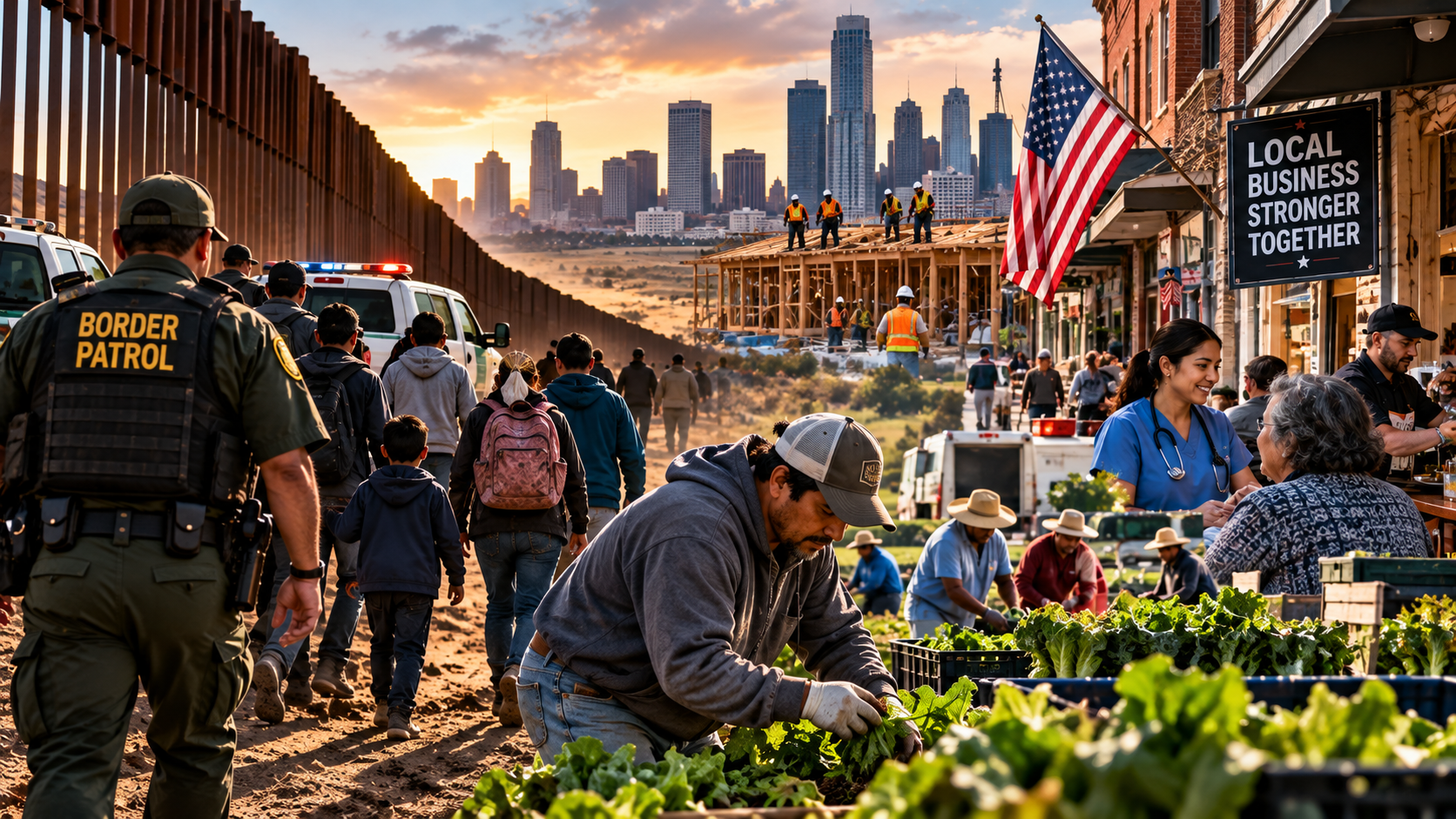
The consequences can include a sudden loss of a caregiver or income, emergency childcare, interrupted access to medication, and difficulty coordinating school, work and legal appointments. Mixed-status households may include U.S.-citizen children whose lives are nevertheless affected by a parent’s detention or removal. Outcomes depend on who is detained, whether another caregiver is available, the speed of the case and access to legal assistance.

The administration has disputed calling its approach a family-separation policy, while critics argue that expanded discretion to detain and remove parents makes separation more likely. A separation may be an unintended consequence rather than a stated policy objective, but its effects on a child can still be serious. Conversely, a detained parent does not automatically mean a confirmed separation. Responsible reporting preserves both distinctions.
Practical safeguards include reliable caregiver planning, accurate family-contact records, legal advice, communication between parents and children, and timely case decisions. Such protections do not decide the immigration claim; they reduce avoidable risks while it is decided.
4. Unaccompanied children and the debate over legal representation
Children who arrive without a parent or legal guardian may need to explain experiences of violence, trafficking or family danger while navigating proceedings in an unfamiliar language. Their age and vulnerability make the quality and independence of legal assistance especially important.
On October 6, the Associated Press reported that the administration was creating an in-house legal division at the Department of Health and Human Services to advise and represent unaccompanied migrant children. HHS said the division would support children and safe family reunification. The announcement did not clarify when it would be fully operational or whether independent non-governmental legal providers would continue to receive funding. {ext(“ap_child_attorneys”, “Read AP’s report on legal representation for children”)}
Advocates questioned independence because HHS is part of the federal government and responsible for the custody and care of unaccompanied children, while other federal agencies pursue immigration enforcement. They argue that government-employed lawyers may face conflicts that independent representatives do not. These are advocates’ concerns, not a court finding that the division has failed. The administration says the division is intended to provide legal support and help reunite families.
The key test is whether a child’s representative owes an independent duty to the child, can preserve confidentiality, investigate claims, work with interpreters and challenge the government’s position when necessary. Representation does not guarantee a child may remain in the country; it helps ensure the child can understand the rules, present relevant facts and make informed decisions. Voters should ask who represents children, how independence is protected, what happens when no lawyer is available and how errors can be reviewed.
5. Border enforcement, asylum and detention are related—but different—questions
Border security concerns who enters and how arrivals are screened. Asylum is a legal process for people seeking protection under applicable law. Interior enforcement concerns people already in the country who may be arrested or placed in removal proceedings. Detention adds questions about release, bond hearings, custody conditions and how long cases take. These systems intersect, but one measure cannot stand in for all the others.
Reuters reported on October 1 that the Supreme Court agreed to hear a dispute over the administration’s broad mandatory-detention policy for certain people in the United States without lawful status who are contesting deportation. The administration argues that its interpretation of federal law requires detention for the covered group; many lower-court decisions have rejected that interpretation, according to Reuters. The Supreme Court docket scheduled argument for December 9, 2026. As of October 24, the Court had not decided the merits. {ext(“reuters_scotus”, “Read Reuters’ detention-policy report”)} {ext(“scotus_docket”, “Check the official Supreme Court docket”)}

Detention can mean separation from children, interruption of employment, loss of income and difficulty obtaining records or helping counsel prepare a case. The administration argues that its policy reflects federal law and enforcement responsibilities; challengers dispute its authority to require detention without a bond hearing in the circumstances at issue. Those claims must be evaluated through the statute, precedents and the Court’s eventual ruling—not by assuming the result before argument.
Reduced border encounters may show fewer people were encountered or processed at a particular location and time. They do not establish whether interior arrests are rising, whether asylum processing is fair, how many families have been affected or how long detainees remain in custody. CBP’s data is published by fiscal year, location, component and demographic category; the dashboard available for this article was current through September 4 and included month-end reporting through August. Comparisons should match definitions and date ranges. {ext(“cbp_data”, “Review official CBP encounter data”)}
6. Communities feel both enforcement effects and economic dependence
Immigration policy reaches into rural towns, agriculture, hospitals, construction, restaurants, schools and local services. Employers may rely on legally present immigrants or temporary seasonal workers; a sudden loss of staff can affect harvests, patient care, construction schedules or a small business. Effects vary by industry and place, and one employer’s claim does not prove every restriction will cause a shortage.
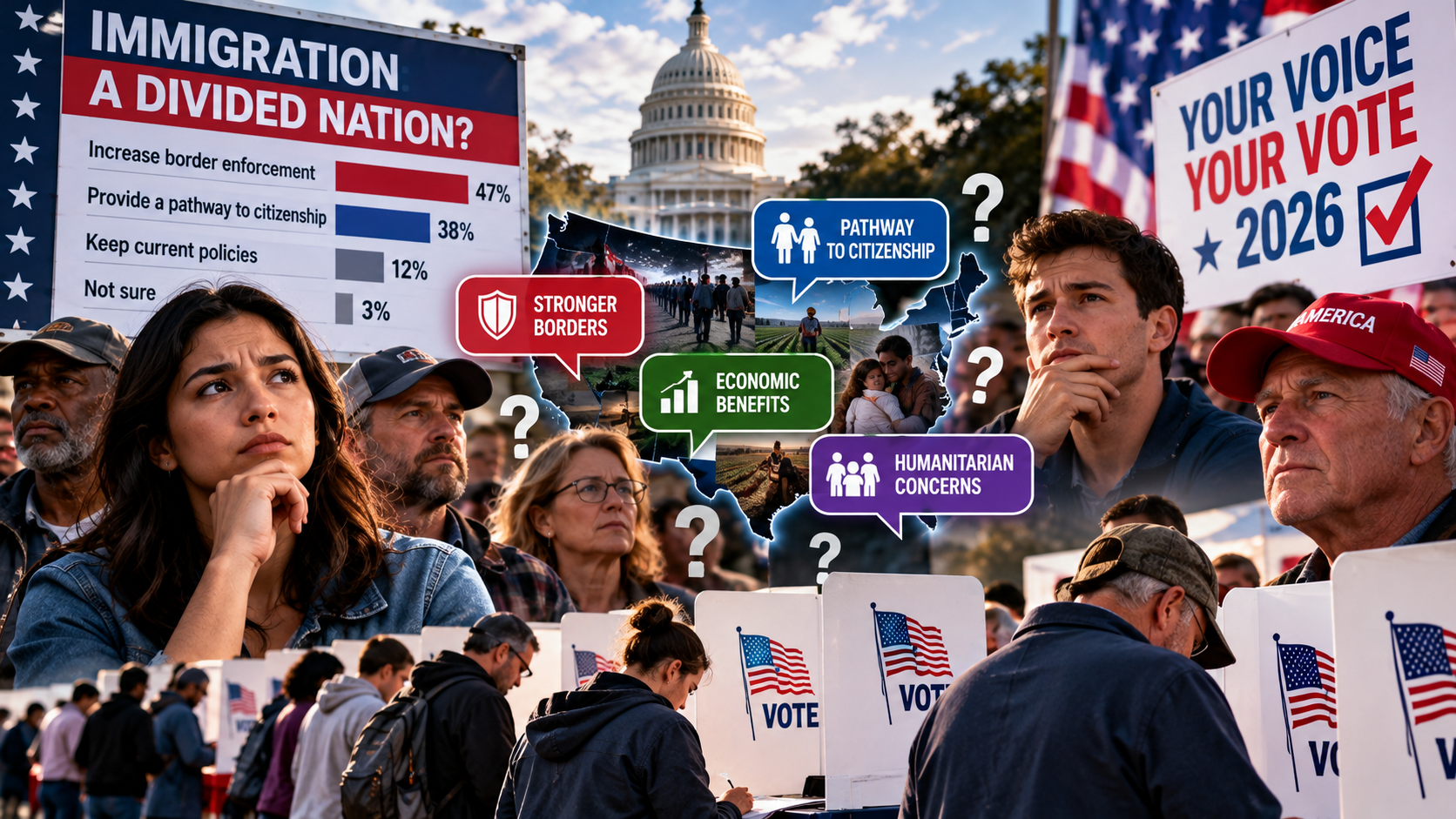
The AP-KFF rural survey found that most rural voters saw legally present immigrants and seasonal farmworkers as important to local economies, while views of the broader enforcement crackdown were split. Some supported enforcement because they prioritised the rule of law or public safety; others said it had harmed families, removed valued workers or disrupted communities.
Local officials may also face practical questions about schools, healthcare access, interpreting services, emergency response and trust in police. Immigration status, language or nationality cannot substitute for evidence of an individual’s conduct. Community trust can suffer when residents believe that reporting a crime or seeking medical help could expose family members to enforcement.
7. What humane, lawful immigration enforcement should be measured against
“Humanity” becomes meaningful when it is connected to specific practices. Immigration policy can be judged by decision quality, consistent legal procedures, safe custody, child protection, record accuracy and the ability to correct mistakes. These standards do not require abandoning enforcement; they require that enforcement be lawful, reviewable and proportionate to the government’s stated goals.
Six tests for evaluating policy
- Legal authority: Is an action supported by statutes, regulations and relevant court rulings? Is the process clearly identified?
- Individual review: Can a person present evidence and challenge errors, especially when detention or removal could separate a family?
- Child protection: Is there a reliable plan for caregivers, communication and safety if a parent is detained?
- Independent legal help: Can people, especially children, receive competent advice from someone able to represent their interests independently?
- Transparent data: Do agencies publish consistent figures on encounters, detention, removals, family impact, processing times and serious incidents?
- Accountability: Is there a process to review complaints, correct records, release people when legally required and remedy unlawful conduct?
Political parties may disagree about who qualifies for protection, how much detention is necessary or which priorities should be funded. Those choices can be debated democratically. But accuracy, due process and accountability should apply regardless of which party controls Congress or the White House.
Security and dignity are not automatically opposites. A functioning system needs to identify who is entering, enforce the law, investigate genuine threats and process cases efficiently. It also needs safe custody, a meaningful chance to present protection claims, clear records and review of government decisions. Humane policy needs workable rules and resources; enforcement needs safeguards and accountability.
8. What voters should ask candidates before November 3
Campaign promises become easier to assess when they are converted into practical questions:
- What data will show whether border management is working, and will it distinguish border encounters from interior enforcement?
- What is the plan to reduce case backlogs while following court orders and preserving individual review?
- How will children be protected when a parent is detained, and who tracks family connections?
- Will unaccompanied children have independent legal representation, and how will any government-run alternative protect their interests?
- How will employers comply with labour law while avoiding sudden disruption to essential local sectors?
- What independent review applies to allegations of unlawful detention, mistreatment or incorrect records?
These questions do not prescribe a party preference. They test whether a candidate’s position includes measurable outcomes and operational details, with realistic authority, funding and safeguards.
Conclusion: the cost of a political decision is measured in real lives
Before the 2026 midterms, immigration is a debate about national borders and national identity—but also about courtrooms, workplaces, schools and family homes. Polling shows sharply different views of enforcement, while research documents how detention and removal can affect children and communities. No single national statistic captures those experiences, and no campaign slogan resolves the legal questions.
Immigration policy should be judged by whether laws are enforced consistently, cases are processed efficiently, rights are respected, children are protected, communities can function and agencies are accountable for errors. Voters should ask what will change, under which authority, how success will be measured and what safeguards will prevent avoidable harm. Security and humanity should be treated as responsibilities, not opposing slogans.
Frequently asked questions
When are the 2026 U.S. midterm elections?
The federal general election is scheduled for Tuesday, November 3, 2026. State election offices provide official information on registration, ballots and polling places.
Is immigration the most important issue for midterm voters?
In Pew’s October 2026 survey, 59% of registered voters said immigration was very important to their vote, compared with 84% for the economy and 68% for healthcare. Views differed by partisan preference.
How many children have been separated from a parent by current enforcement?
There is no complete official count of all recent family separations. MPI describes the number as unknown and cites an estimate of children with a detained parent. That estimate should not be described as a confirmed count of separations.
Has the Supreme Court ruled on mandatory immigration detention?
As of October 24, 2026, the Court had agreed to hear the dispute, with argument scheduled for December 9. The merits remained undecided.
Can enforcement and humane treatment coexist?
They can be assessed together through lawful authority, fair individual review, safe custody, child protection, reliable data and accountability. The results depend on policy design and implementation.
Sources and references
This independent analysis draws on official election and border data, polling, legal records and specialist migration research. Polls are labelled by sample and field date; estimates are distinguished from confirmed counts; pending cases are not described as final rulings.
- Reuters — “Three issues defining the 2026 US midterm elections,” October 20, 2026.
Read Reuters’ election analysis ↗ - Pew Research Center — “Economy ranks as top issue in midterms for all voters, but partisans differ over the importance of other issues,” October 8, 2026.
Read Pew’s survey and methodology ↗ - Associated Press/KFF — “Trump’s immigration crackdown divides rural voters as midterms approach,” October 5, 2026.
Read the AP-KFF poll report ↗ - Migration Policy Institute — “In Its Second Term, Trump Administration Quietly Expands Family Separation,” July 30, 2026.
Read the family-separation analysis ↗ - Associated Press — “Trump administration to assign government lawyers to migrant kids’ cases, worrying advocates,” October 6, 2026.
Read AP’s report on child representation ↗ - Reuters — “Supreme Court to weigh Trump’s mandatory immigration detention policy,” October 1, 2026.
Read Reuters’ detention-policy report ↗ - U.S. Supreme Court — Docket No. 26-426.
Check the official docket and scheduled argument ↗ - U.S. Customs and Border Protection — Nationwide Encounters dashboard, data current through September 4, 2026.
Review CBP’s official encounter data ↗
Look beyond campaign slogans
Evaluate immigration policy through clear legal rules, transparent data, practical safeguards and the real-world consequences for families and communities.
Editorial note: This is nonpartisan political and public-policy analysis, not legal advice or an endorsement of a party. Immigration law and litigation are changing; verify the latest official status before republication. The article avoids graphic content and does not portray a person’s immigration status as evidence of criminal conduct.